Travel tips
Is tipping in Spain expected? The honest guide to local etiquette
Tipping in Spain is entirely optional because waitstaff earn stable contract wages. Locals rarely tip more than a few loose coins for casual meals, reserving a 5% to 10% tip only for exceptional service at upscale restaurants.
I built TruePrice because I got tired of seeing travelers get guilted into paying double for their meals, whether through marked-up tourist menus or inflated tipping expectations. Spain is one of the most beautiful places on earth to eat, but it is also a place where the tipping culture is widely misunderstood. If you apply American or even British tipping habits in Madrid, Barcelona, or Seville, you are not just being generous: you are actively distorting the local economy and marking yourself as a target for tourist traps.
Here is the honest truth about tipping in Spain, backed by how locals actually behave and how the service industry is structured.
How tipping in Spain actually works
To understand tipping in Spain, you have to understand Spanish labor laws. Waitstaff in Spain are not dependent on tips to survive. They are contracted employees who receive a set monthly salary, paid vacation, sick leave, and healthcare. While being a waiter in Spain is hard work and not always highly paid, it is a formal profession with a baseline of security.
Because of this, tipping (known locally as propina) is entirely optional. It is seen as a small token of appreciation for exceptional service, not a mandatory subsidy to top up a sub-minimum wage. If you sit down at a cafe, order a cafe con leche for 1.80 EUR, and leave a 2 EUR coin, you are doing it right. You do not need to calculate 15% or 20% on your phone. In fact, doing so looks incredibly strange to the staff.
The math of Spanish tipping
When locals do tip, they do not use percentages. They use loose change.
If you have a casual lunch (a menu del dia for 12 to 15 EUR), leaving the small coins left over from your change is perfectly normal. If your bill is 28.50 EUR and you leave 30 EUR, the 1.50 EUR left behind is considered a very nice tip.
For high-end dining where the service is highly attentive and the bill runs over 100 EUR, leaving 5% to 10% is appropriate if you loved the experience. But even then, going over 10% is almost unheard of among Spaniards.
Spotting the tourist traps that demand tips
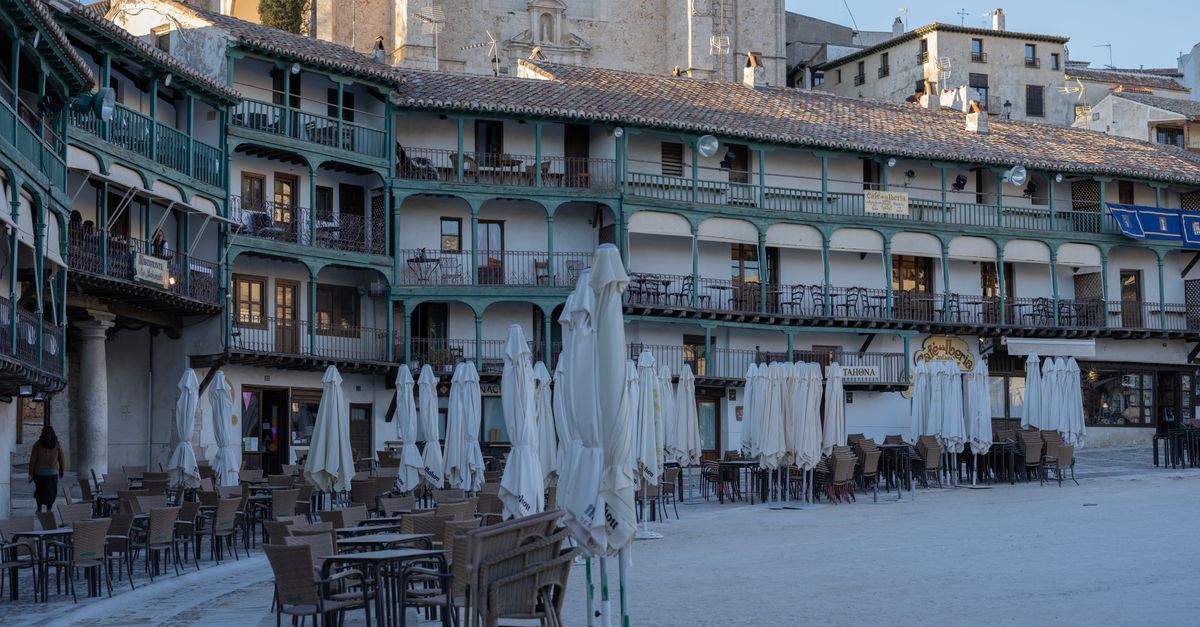
In highly touristed areas like Las Ramblas in Barcelona or Plaza Mayor in Madrid, some restaurants have started exploiting tourist confusion. They know that foreigners are used to tipping high percentages, and they have adapted their behavior to extract extra cash.
Here are the red flags to watch out for:
- The “service not included” warning: If a waiter points to the bottom of the bill and explicitly tells you “service is not included,” they are targeting you. In Spain, VAT (IVA) must be included in the menu prices by law, and there is no legal “service charge” that can be added on top without clear prior warning on the menu.
- Pre-printed tip suggestions: If your receipt comes with suggested tip amounts of 10%, 15%, or 20% printed at the bottom, you are in a tourist trap. No authentic local restaurant does this.
- The verbal hint: If the waiter brings the card machine and says “the machine will ask you if you want to leave a tip,” feel free to press “no” or “0%”. They are hoping your social awkwardness will force you to press 10%.
Tipping by scenario: A cheat sheet
To keep things simple, here is how you should handle different dining and drinking situations across Spain.
| Scenario | Typical bill (EUR) | What a local leaves | What a tourist trap wants you to leave |
|---|---|---|---|
| Coffee or beer at the bar | 2.00 - 3.50 | Nothing, or 10-20 cents | 1.00 |
| Midday menu del dia | 12.00 - 18.00 | Loose change up to 1.00 | 10% to 15% |
| Tapas run (multiple stops) | 15.00 - 25.00 | Nothing, or 50 cents at the end | 10% per stop |
| Casual sit-down dinner | 40.00 - 60.00 | 2.00 to 3.00 | 10% to 15% (4.00 - 9.00) |
| Fine dining restaurant | 120.00+ | 5% to 10% (if excellent) | 15% to 20% |
How to tip on a card in Spain
Spain is rapidly becoming a cashless society. You can pay for a 1.50 EUR espresso with your phone or credit card almost anywhere. However, the cashless revolution has made tipping slightly more complicated.
Many smaller, traditional bars do not have an option to add a tip to the card terminal. If you want to leave a tip, you must leave it in cash. It is always a good idea to keep a few 50-cent, 1-euro, and 2-euro coins in your pocket for this exact reason.
If you are at a nicer restaurant that does allow card tips, you will need to tell the waiter before they swipe your card. You cannot usually write the tip on the receipt after the card is processed, as is common in the US. You simply tell them the total amount you want to pay. For example, if the bill is 47 EUR, you can hand them your card and say “make it 50, please” (or pon cincuenta, por favor).
Other tipping scenarios: Taxis, hotels, and tour guides
Tipping expectations extend beyond restaurants. Here is how to handle other services during your Spanish holiday.
Taxis and ride-shares: If you take a standard taxi, round up to the nearest euro. If the fare is 8.40 EUR, give the driver 9.00 EUR and tell them to keep the change. If the service was poor or the driver took a suspicious route, do not leave anything. For Uber, Cabify, or Bolt, tipping through the app is optional: a 1 EUR tip for a smooth ride is plenty.
Hotels: In mid-range to luxury hotels, it is polite to tip the porter 1 EUR per bag if they carry your luggage to your room. For housekeeping, leaving 1 EUR to 2 EUR per night on the table at the end of your stay is a kind gesture, though not strictly required.
Tour guides: This is the one area where tipping is standard. If you take a “free” walking tour, the guide relies entirely on tips. A fair tip is 10 EUR to 15 EUR per person for a good two-hour tour. For a private, paid tour, 10% of the total cost is a generous way to say thank you.
Enjoy Spain without the financial anxiety
The beauty of Spain is its relaxed, social culture. Dining out is meant to be an affordable, daily pleasure, not a stressful math equation at the end of the night. When you tip like a local, you respect the local economy and save money for what actually matters: more tapas.
I built TruePrice to help you cut through the tourist markups and feel confident with your cash wherever you travel. Download TruePrice free today to see the real, fair local prices for everything from taxi rides to tapas across Spain and beyond: https://truepriceapp.com



Frequently asked questions
Do you have to tip in Spain?
No, tipping is not mandatory or expected. Waitstaff receive a living wage and contracts under Spanish law, so tips are treated as a small extra for great service.
What is a normal tip for a restaurant bill in Spain?
For a standard lunch or dinner, locals usually leave loose change or round up by 1 to 3 euros. For high-end dining, a tip of 5% to 10% is considered generous.
Can you tip with a credit card in Spain?
Yes, but you must tell the waiter the total amount you want to pay before they swipe your card, as Spanish card machines do not usually let you write a tip on the receipt afterward.
Is there a service charge included in Spanish bills?
No, there is no legal service charge in Spain. The menu price must include VAT (called IVA), and any attempt to add an extra service fee to your bill is a major red flag.
How much should I tip a taxi driver in Spain?
Tipping taxi drivers is optional. The easiest method is to round up to the nearest euro: if the ride costs 11.20 EUR, giving the driver 12 EUR is a perfect tip.
Check fair prices anywhere
TruePrice is free on the App Store and Google Play.